 Home
Home
Green Transformation at VANYO | China News Service Reports on the Evolution of Wanyang’s Industrial Chain
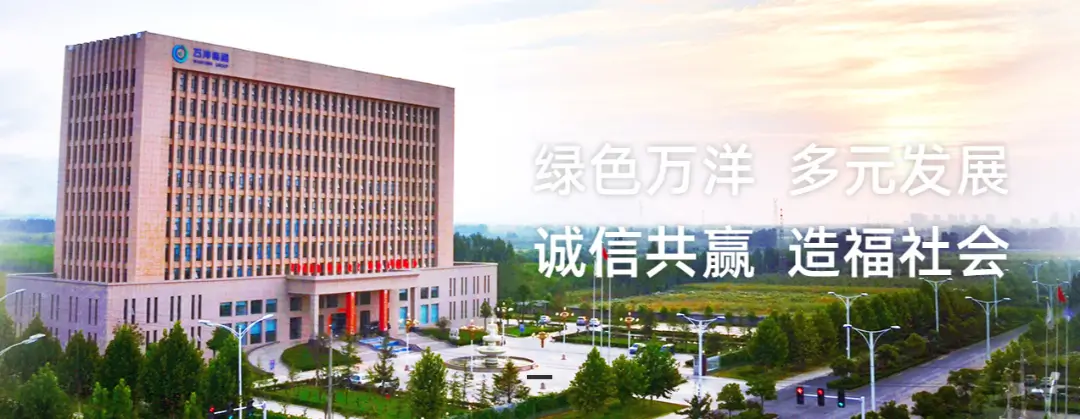
Recently, China News Service (CNS) published a feature report exploring the production facilities of Wanyang Group. Told from the unique perspective of a single particle of mineral powder, the report provides an in-depth look at the company’s circular economy model and its efforts to extend, strengthen, and integrate its industrial chains.
An ordinary particle of mineral powder, hidden deep within an ore, could hardly have imagined that it would become the starting point of an extensive circular industrial chain.
Yet, countless particles of mineral powder undergo a series of transformations in Wanyang’s smelting facilities, supporting an integrated industrial ecosystem that spans non-ferrous metal smelting, new energy batteries, precious metal processing, building materials, fertilizers, and other sectors.
Let us follow the journey of a particle of mineral powder into the production facilities of Jiyuan Wanyang Smelting (Group) Co., Ltd. (Wanyang Group) and discover how it undergoes remarkable transformations throughout the industrial chain.
From Mineral Powder to Refined Metals: The Journey Begins
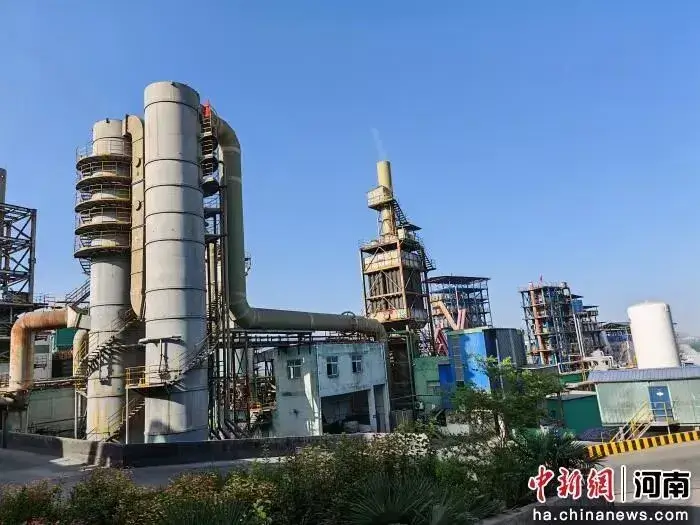
Early in the morning, transport vehicles deliver millions of particles of mineral powder to Wanyang Group’s smelting facilities.
After scientific proportioning and blending, the raw materials enter the core of the smelting process—the innovative “Three-Furnace Continuous” process.
Here, the mineral powder undergoes a series of high-temperature treatments, transforming again and again.
“Traditional processes often involve high energy consumption, long production cycles, and large land requirements. To address these challenges, our R&D team developed the ‘Three-Furnace Continuous’ process based on the natural elevation differences of the production site,” said Li Weiwei, Director of the Technical Standards Department at Wanyang Group.
The process seamlessly integrates three stages—bottom-blowing, reduction, and fuming—into one continuous operation.
Through high-temperature treatment, impurities are progressively separated from the mineral powder, marking its first major transformation.
Part of the refined material becomes electrolytic lead, while other valuable elements—including gold, silver, zinc, antimony, and bismuth—are separated and supplied as raw materials for subsequent production processes.
The key to this transformation lies in maximizing resource utilization.
Rather than allowing materials to become waste, Wanyang Group seeks to extract value from every stage of production, creating a circular system in which resources are fully utilized.
Turning Waste into Resources
The gases generated during the smelting process are collected and treated to produce sulfuric acid, which can then be further processed into compound fertilizers.
Meanwhile, solid smelting residues undergo further processing and can be converted into gypsum boards widely used in construction.
“Every stage of production aims to maximize the value of the resources involved,” said Lu Haijun, Director of Production and Operations at Wanyang Group.
Through this approach, materials generated from one production process become valuable inputs for another, providing continuous feedstock for the company’s new energy and new materials businesses.
In this way, Wanyang continues to extend, strengthen, and complement its industrial chains, creating greater value from resources that might otherwise be discarded.
From Electrolytic Lead to New Energy Batteries
The mineral powder that has been transformed into electrolytic lead then enters the new energy sector.
At the production facilities of Henan Wanyang Lithium Battery Technology Co., Ltd., these materials undergo multiple precision processing stages and are transformed into high-performance lead-acid batteries and lithium batteries.
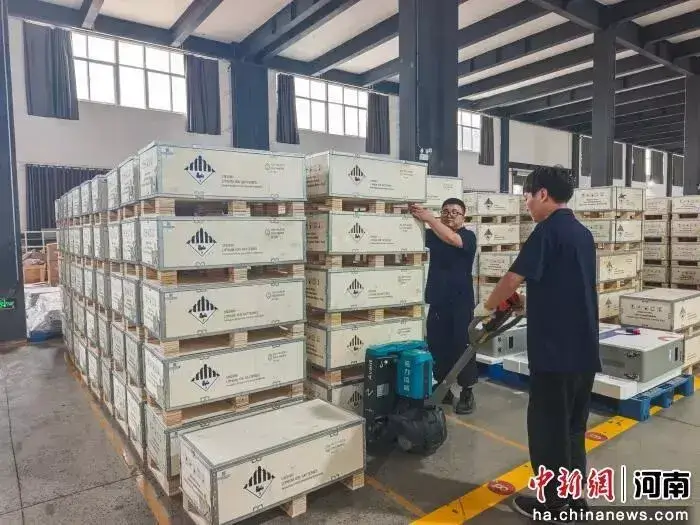
These products serve a wide range of applications, including telecommunications, electric power, transportation, and financial infrastructure.
Wanyang’s new energy products are not limited to the domestic market. They have also reached international markets, helping provide lighting and stable electricity supplies to tens of thousands of families in Africa.
More importantly, the industrial chain does not end when a battery reaches the end of its service life.
When batteries are retired, they are returned to recycling facilities, where they undergo crushing, sorting, smelting, and refining before being transformed once again into recycled lead.
This creates a complete green cycle:
Production → Use → Recycling → Regeneration
Resources therefore remain within the industrial system for as long as possible, reducing waste while supporting a more sustainable production model.
From Industrial Raw Materials to Precious Jewelry
The gold and silver elements separated during the smelting process undergo another remarkable transformation—from industrial raw materials into high-value consumer products.
This represents a significant increase in value, transforming materials once sold by the ton into products ultimately valued and sold by the gram.
Just 500 meters from the smelting facilities, Wanyang’s gold and silver deep-processing workshop carries out further refining and manufacturing.
Gold extracted from the mineral powder is purified into standard gold bars, which are then processed into a variety of jewelry products, including lucky pendants, traditional gold bracelets, and contemporary necklaces.
Silver ingots undergo a series of processes, including rough rolling, precision rolling, quenching, polishing, and electroplating.
Automated chain-making machines draw silver into fine wires, while precision engraving equipment adds intricate patterns and textures.
After undergoing multiple stages of refinement, the materials are transformed into finished jewelry products.
Building a Circular Industrial Ecosystem
From mineral powder to construction materials, batteries, fertilizers, and jewelry, the continuous extension of Wanyang’s core industrial chains has created new branches of production and a diversified industrial ecosystem.
Countless particles of mineral powder collectively support an interconnected industrial matrix in which different sectors complement one another.
This journey through the production facilities is more than a story of physical transformation.
It is a real-world example of how Wanyang Group is extending traditional industries, filling gaps across the industrial chain, strengthening core capabilities, and creating new value through circular production.
Inside the production facilities, intelligent equipment operates in an orderly manner, while real-time data continuously updates across centralized control screens.
The workshops are clean and well organized.
And more mineral powder will continue to arrive, beginning another journey of transformation—moving through Wanyang’s circular industrial chain, becoming new products and new resources, and ultimately helping traditional industries renew their value and move toward a greener future.
Source: China News Service (CNS)
Reporter: Li Haizhu
 The 140th Canton Fair Wraps Up Perfectly|VANYO Energy Gets Amazing On-Site Response, Exploring New Opportunities in Energy Storage Together
 Address: Wanyang Gold and Silver Building 6, Circular Economy Park, Sili Town, Jiyuan City, Henan Province, China