 Home
Home
2026 Nigeria Energy Storage Import Regulations: What Importers Need to Know
Nigeria’s energy storage market is developing rapidly, and importers and distributors need to pay closer attention to compliance, import procedures and technical requirements in 2026.
For businesses importing lithium batteries, inverters and energy storage systems, understanding the latest requirements can help reduce clearance delays and avoid unnecessary risks.
What Has Changed in 2026?
1. National Single Window Is Now in Use
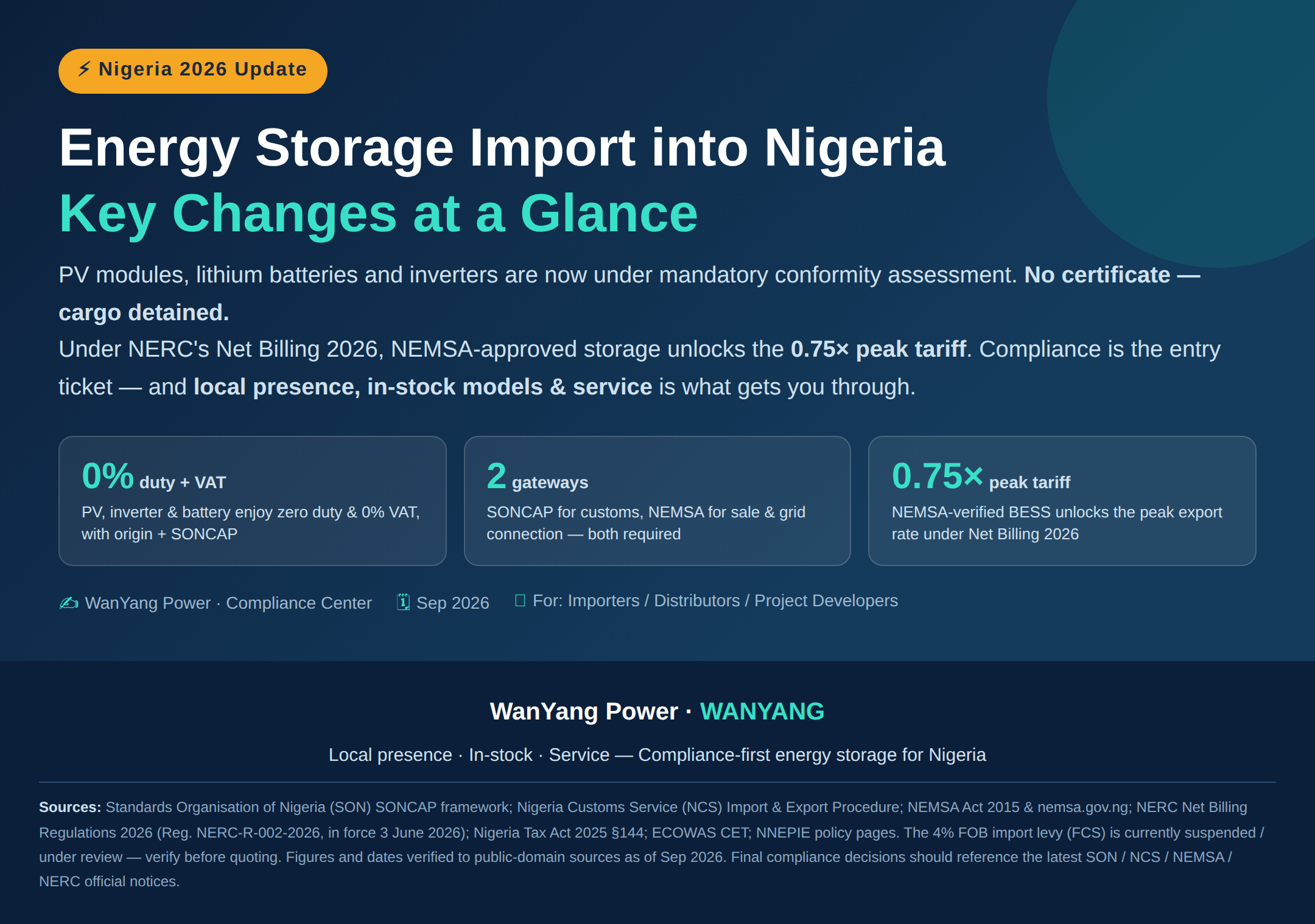
From March 27, 2026, Nigeria’s National Single Window (NSW) began integrating relevant import procedures, including SONCAP and import permit processes.
For energy storage importers, this means import documentation should be prepared earlier and checked carefully before shipment.
2. SONCAP and Battery Documentation
Depending on the product and applicable classification, importers may need to complete relevant SONCAP procedures.
For lithium battery shipments, commonly required compliance and transportation documents include:
01:UN38.3
02:MSDS / SDS
03:Product datasheet
04:Test reports
05:Certificate of conformity where applicable
Packing and shipping documents
The exact requirements should be confirmed according to the specific product and shipment.
3. NEMSA Technical Requirements
Import compliance is only one part of the process.
For energy storage systems used in Nigerian electrical projects, technical requirements and applicable NEMSA inspection or certification procedures should also be considered.
Battery safety, system protection, wiring, inverter parameters and installation requirements can all become important during project implementation.
4. Solar and Energy Storage Tax Environment
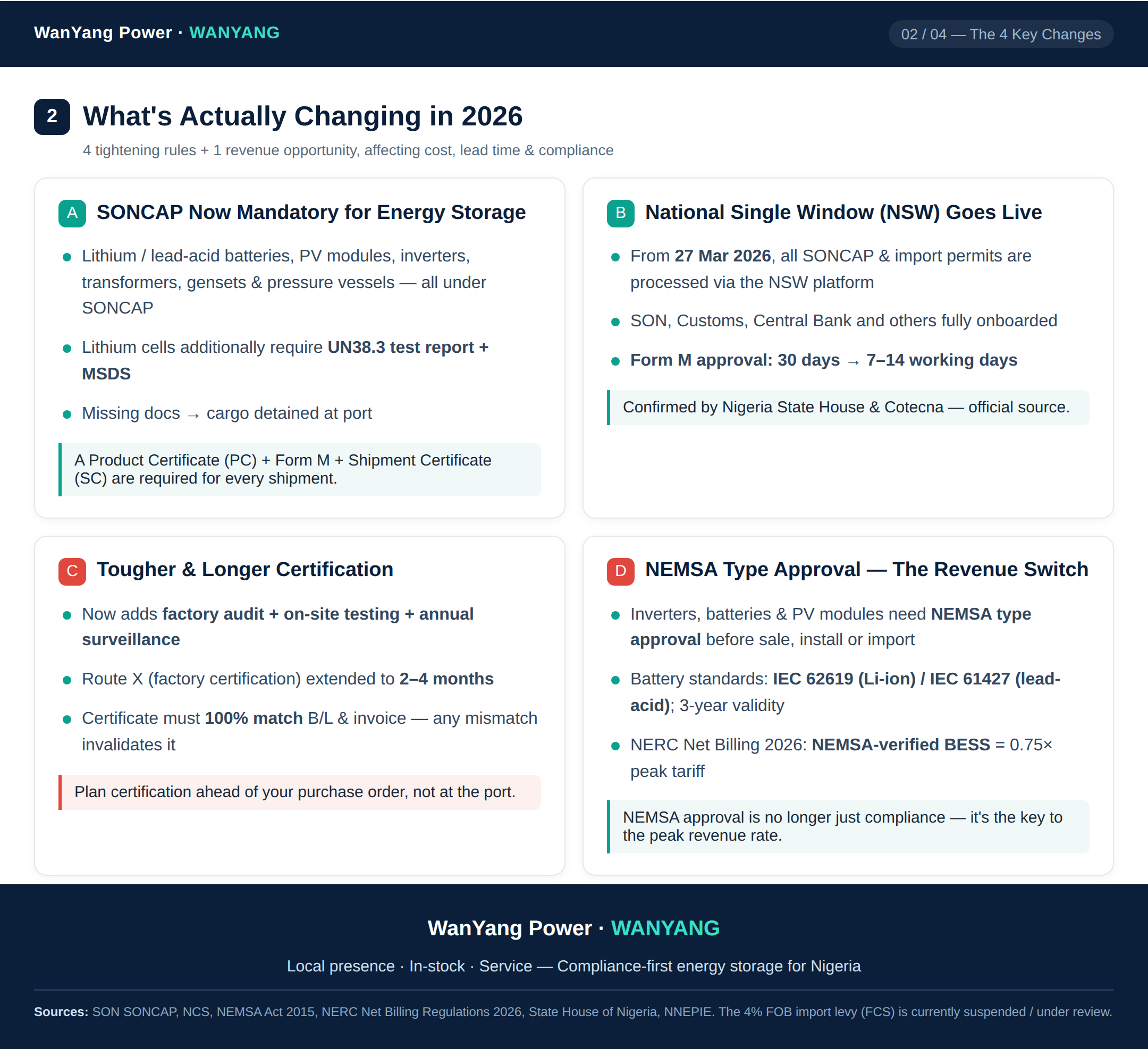
For qualifying solar and energy-storage-related products, 0% import duty and 0% VAT remain the key commercial reference.
Importers should still confirm the applicable HS classification and current customs treatment for each product.
The frequently discussed 4% FCS should not be treated as a confirmed additional cost while its status remains subject to clarification.
What Should Nigerian Importers Prepare?
Before placing an order, distributors and project developers should check four things:
01 — Product
Is the battery or inverter suitable for the intended application?
02 — Compliance
Are the required certificates, UN38.3, MSDS/SDS and technical documents ready?
03 — Import
Are the HS code, NSW and customs procedures properly prepared?
04 — Service
Can the supplier provide technical support, replacement products and after-sales assistance?
A low product price is not enough if documentation is incomplete or technical support is difficult to access.
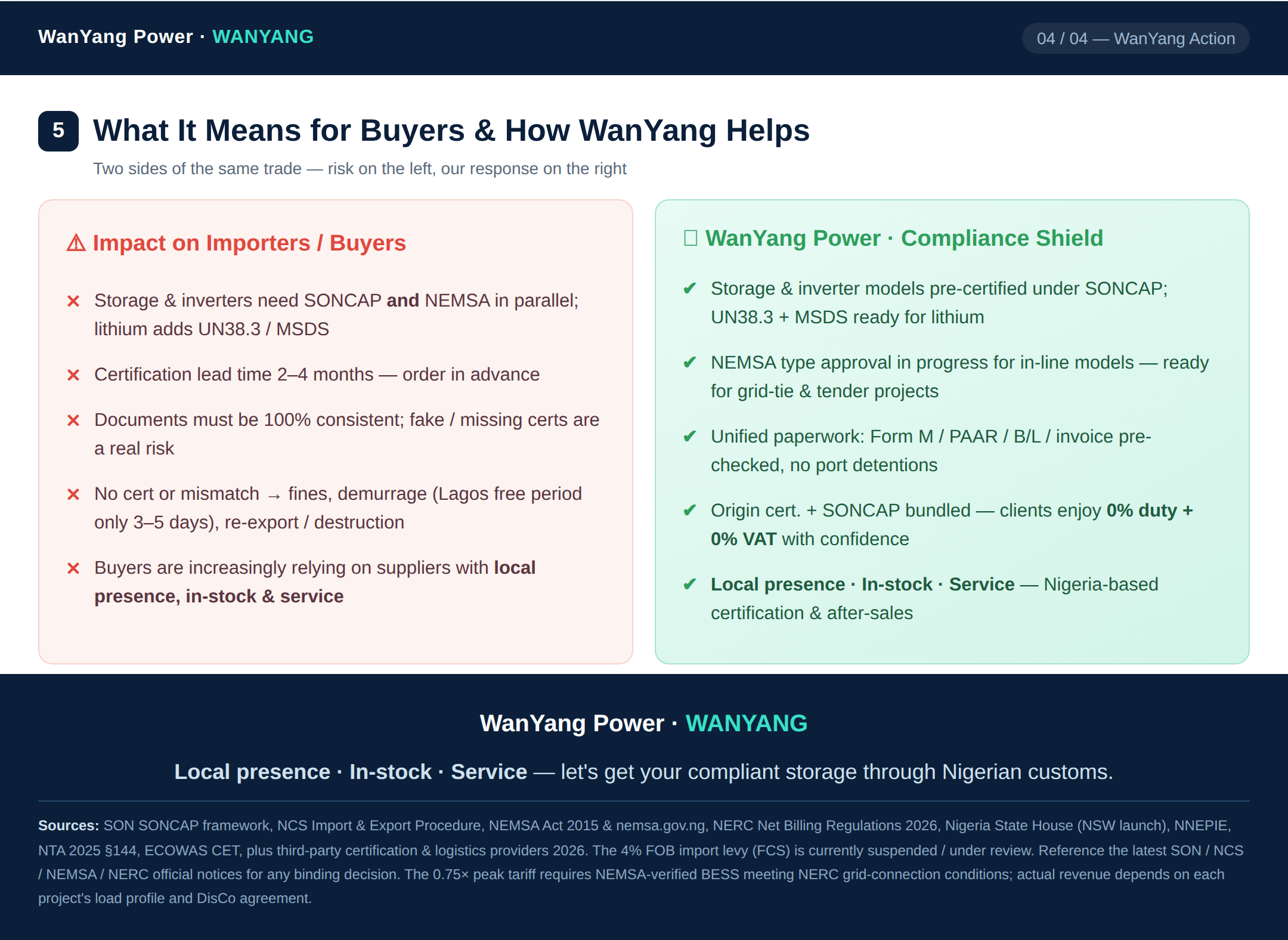
Why Local Supply and Service Matter
For Nigerian energy storage distributors, reliable supply and responsive service can be just as important as product specifications.
Having access to local supply, technical support and after-sales service can help distributors respond to customer needs more efficiently and reduce the impact of long international lead times.
At VANYO, we focus on more than supplying energy storage products.
We support customers with:
01:Energy storage solutions
02:Product documentation
03:Technical support
04:Supply coordination
05:After-sales service
Build Your Nigeria Energy Storage Business with Greater Confidence
In 2026, successful energy storage importation is not only about buying the right battery.
It is about having the right product, documentation, supply and service behind every project.
 How to Verify a VANYO Lithium Battery: The 4-Step Anti-Counterfeit Guide
 Address: Wanyang Gold and Silver Building 6, Circular Economy Park, Sili Town, Jiyuan City, Henan Province, China