
 Home
Home
Is Battery Storage Worth It in the Philippines? A Simple 5-Year Payback View
From electricity costs to battery lifetime — how Philippine buyers can think about the economics of residential energy storage.
When electricity prices are high, the conversation around energy storage changes.
Instead of asking only “How much is the battery?”, homeowners, installers and distributors should ask: “How much value can the system create over five years?”
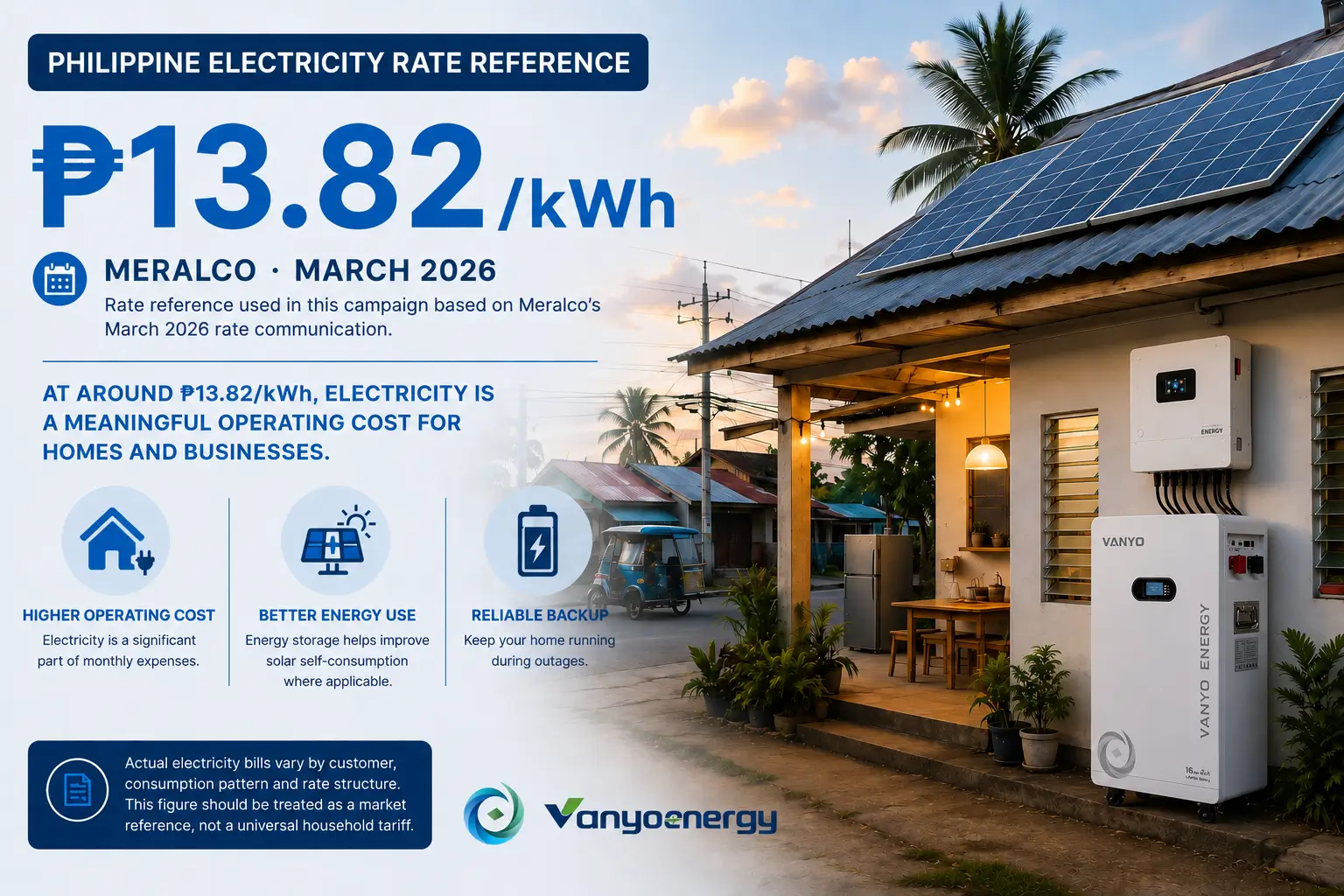
For the Philippine market, the electricity-rate reference used in this campaign is ₱13.82/kWh, based on Meralco’s March 2026 rate communication. Actual electricity bills vary by customer, consumption pattern and rate structure, so this figure should be treated as a market reference rather than a universal household tariff.
1. Start with the electricity cost
At around ₱13.82/kWh, electricity is a meaningful operating cost for households and businesses. Energy storage can help users shift when electricity is consumed, improve the use of available solar generation where applicable, and provide backup power during outages.
But storage economics should not be judged from electricity price alone.
2. Purchase price is only one part of the five-year cost
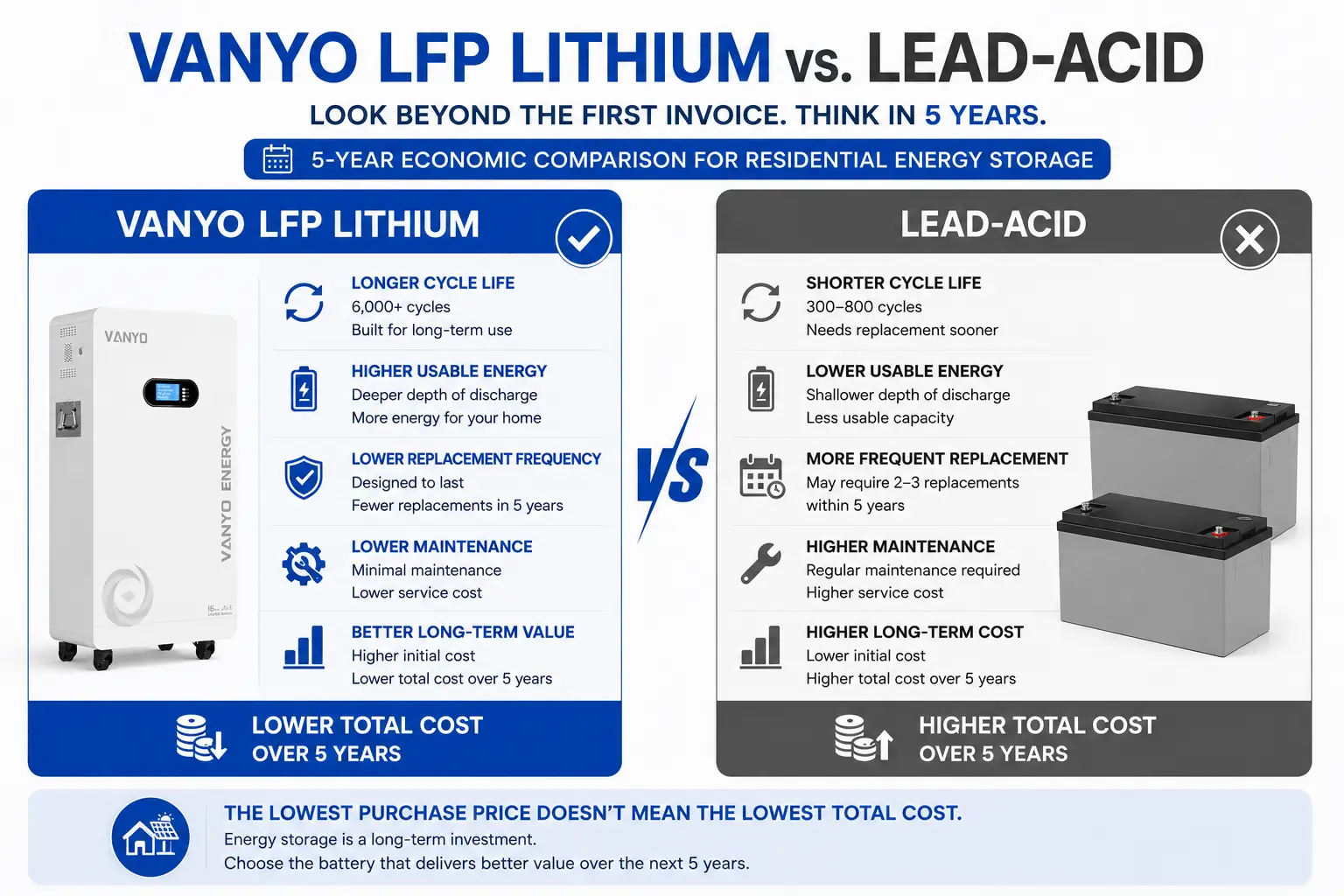
A battery may look cheaper at the time of purchase but become more expensive over its useful life if it needs earlier replacement or creates additional maintenance and service costs.
This is why battery chemistry and cycle life matter.
VANYO Energy uses LFP battery technology for its energy storage solutions, with selected products positioned at 6,000+ cycles. A longer cycle-life design can support longer-term use and reduce the frequency of battery replacement.
For distributors, this is also important when building a customer proposal: the conversation should move from “lowest purchase price” to “total cost over the expected service period.”
3. LFP vs. lead-acid: think beyond the first invoice
Lead-acid batteries can have a lower initial purchase price in some applications. However, buyers should also consider usable energy, cycle life, replacement frequency, maintenance requirements and system efficiency.
A five-year comparison should therefore include:
• Initial battery and system cost
• Expected replacement cost • Usable energy
• Cycle-life expectations
• Maintenance and service
• Installation and commissioning
• Electricity savings or avoided energy cost
The exact result depends on system size, daily load, tariff structure, battery utilization, financing and solar generation. There is no single payback period that applies to every household.
4. What does a 3–5 year payback mean?
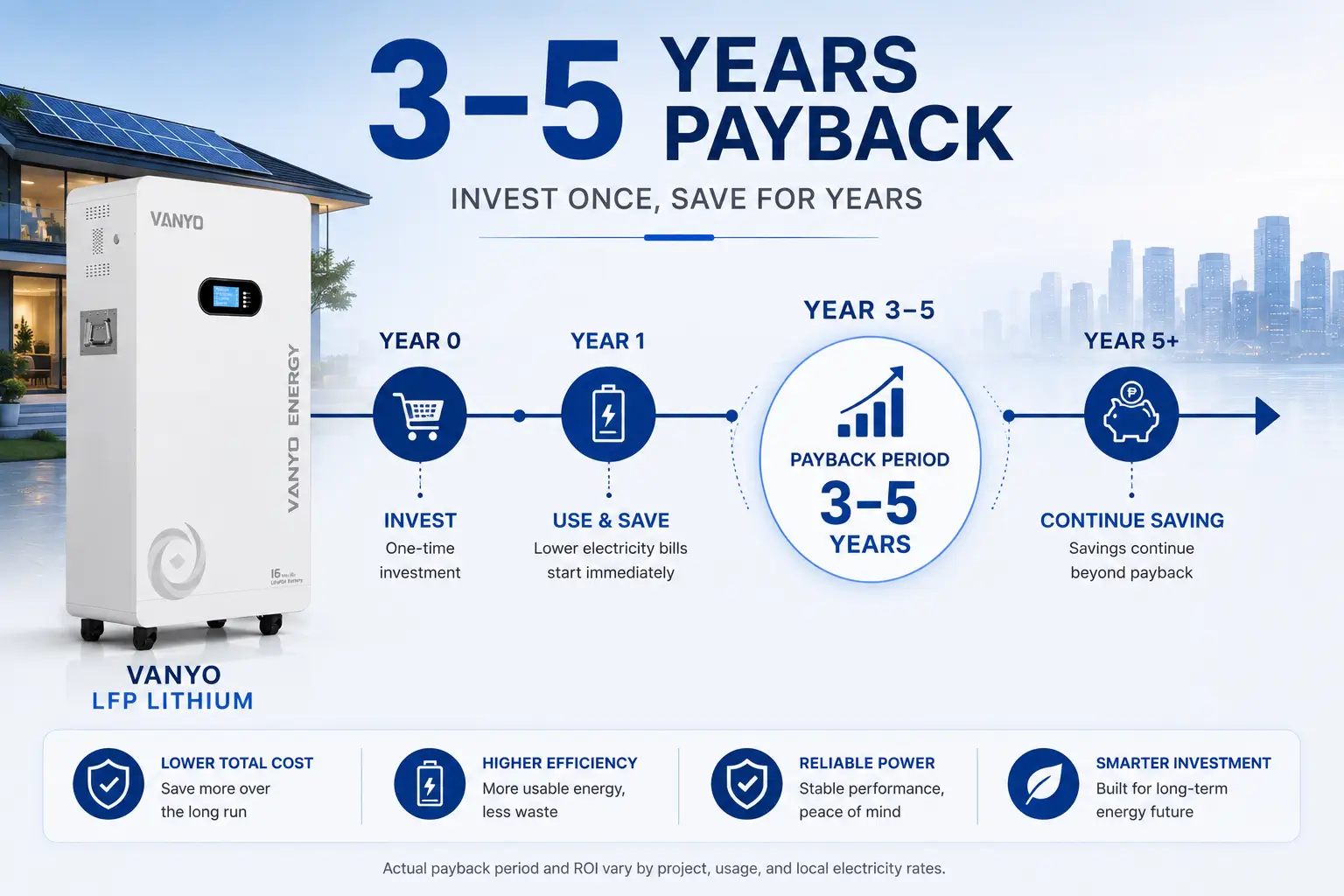
The 3–5 year figure in the campaign brief should be treated as a market reference for residential energy storage, not as a guaranteed result.
A real project calculation needs the customer’s battery capacity, daily electricity consumption, peak/off-peak tariff, solar generation, battery utilization and system price.
For example, two homes with the same battery capacity can have very different economics because one may cycle the battery more frequently or have a different electricity-use pattern.
The right sales approach is therefore simple: use the market reference to start the conversation, then calculate the customer-specific case.
5. Why local stock matters to the economics
Economics are not only about energy savings. Delivery time also has commercial value.
If a distributor has a customer waiting for a replacement battery or a project that needs to be completed quickly, a long international shipping cycle can delay installation and revenue.
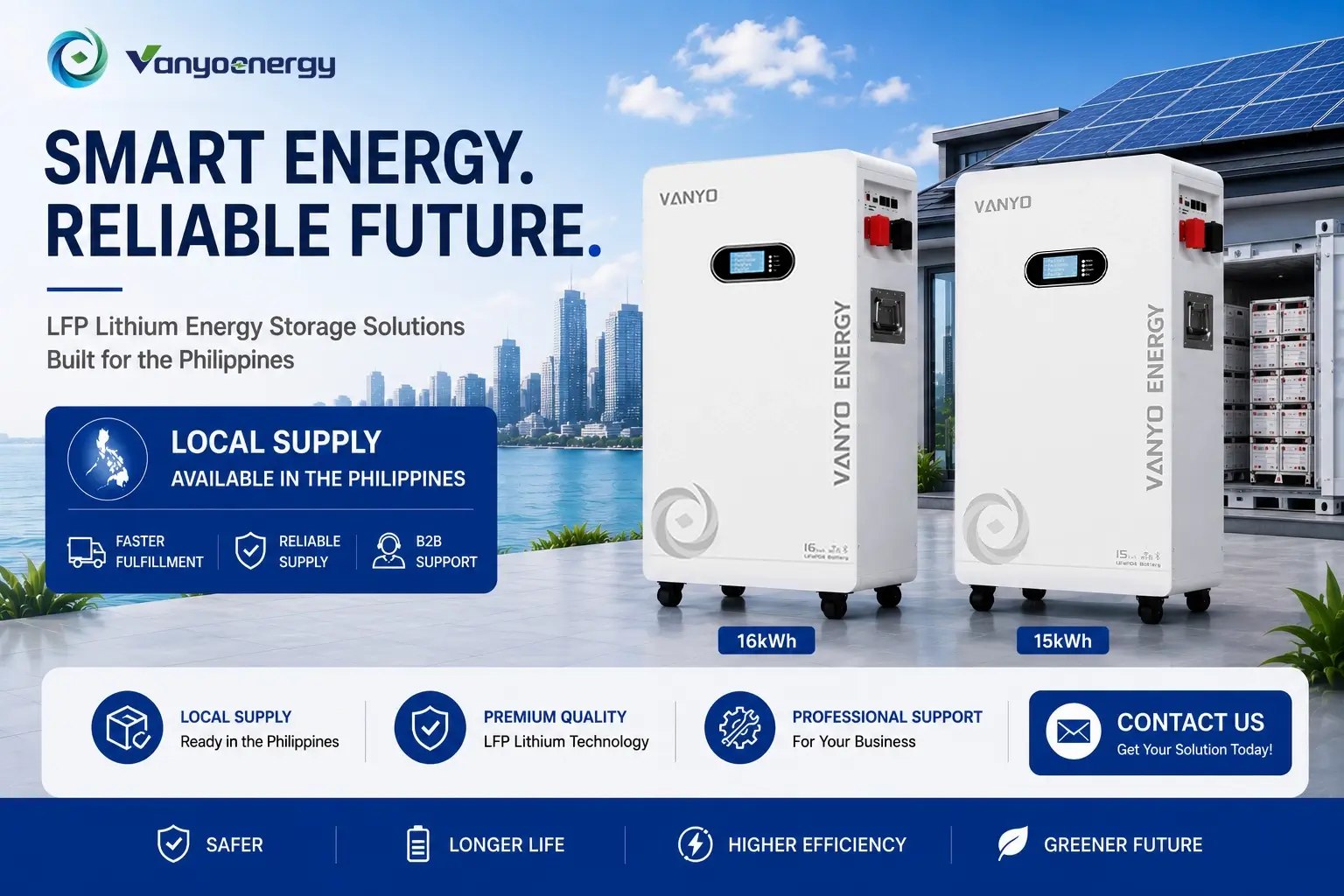
When VANYO local stock is available in the Philippines, distributors can plan faster fulfillment and reduce dependence on long international lead times. The exact delivery time should always be confirmed against current stock and destination.
The Philippine energy storage opportunity is growing, but successful projects still need a clear economic case.
For buyers, the best approach is to compare the five-year picture: electricity cost, battery lifetime, replacement risk, service support and delivery.
VANYO Energy supports Philippine B2B customers with energy storage solutions, technical support and local supply capability.
If you want to estimate a project-specific payback, send us the target battery capacity, daily electricity consumption, inverter model and expected quantity. We can help you build a more realistic calculation.
 2026 Nigeria Energy Storage Import Regulations: What Importers Need to Know
 Address: Wanyang Gold and Silver Building 6, Circular Economy Park, Sili Town, Jiyuan City, Henan Province, China